
Government hearing entitlements, explained
Pensioner Hearing Aids: More Choice Than You Might Expect
Explore fully subsidised hearing aids and selected upgraded options available at no extra device cost to eligible clients through Hidden Hearing. We’ll help you understand your entitlements and find a comfortable fit for your hearing and lifestyle.

Understand Your Entitlements
Explore Hearing Aid Styles
Compare Your Device Options
Find Your Best Fit
Fully or Partially Subsidised: What’s the Difference?
Eligible clients under the Australian Government Hearing Services Program can access fully subsidised hearing aids with no device cost. These devices can deliver excellent hearing outcomes, with features such as directional microphones, feedback control and wireless connectivity on selected models. They also come in different fitting styles, so your options need not be limited to one look or feel. Partially subsidised hearing aids may offer additional choices, such as Bluetooth streaming, rechargeable batteries, advanced speech processing or more discreet designs. An additional device cost would ordinarily apply, but Hidden Hearing makes selected partially subsidised models available at no extra device cost to eligible clients. Your clinician can explain what’s covered and help you choose based on your hearing needs, not just the technology level.
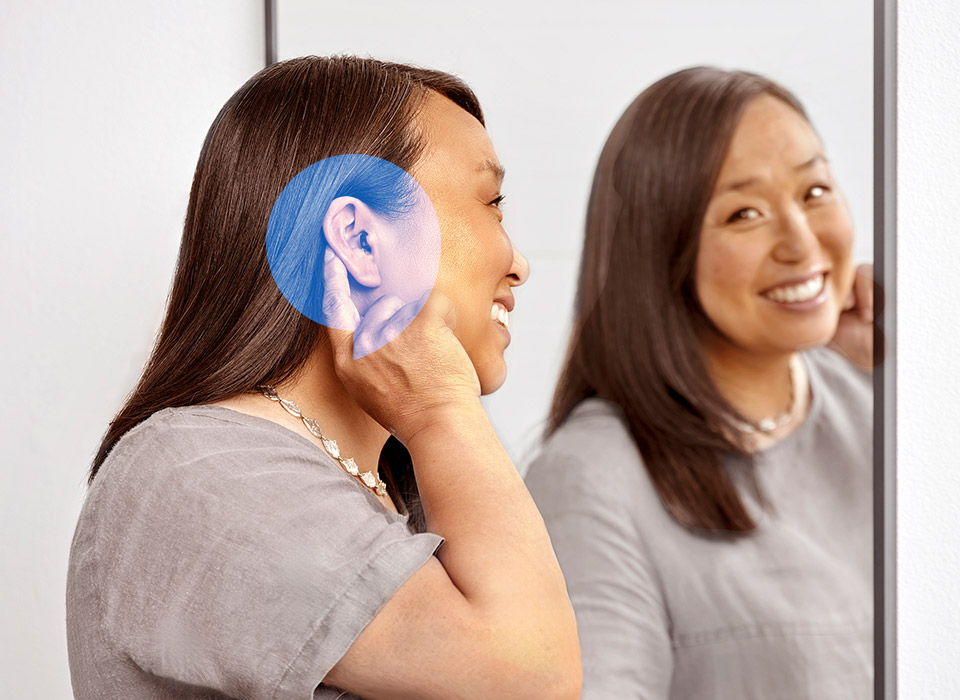
Hearing Aid Styles, Made Simple

Behind-the-Ear and Open-Ear
BTE hearing aids sit behind the ear and deliver sound through a tube and earmould, offering strong amplification and easy handling. Slim-tube and open-ear fittings use a finer tube and small tip for a lighter feel that leaves the ear more open.
Receiver-in-Canal
RIC hearing aids sit discreetly behind the ear, with a thin wire connecting to a receiver inside the ear canal. This flexible style can suit a range of hearing needs and is available with different technology and power options.
Custom In-Ear Options
IIC and CIC devices fit deep inside the ear canal for a discreet appearance. ITC styles sit partly within the canal, while ITE models fill more of the outer ear, offering a larger shape that may be easier to handle. Your ear shape and hearing needs will help determine what fits best.
Find your fit
Hearing aid styles for everyday life
Behind-the-ear (BTE)
Easy to handle and capable of strong amplification, BTE aids suit a wide range of hearing needs. Custom earmoulds can provide a secure, comfortable fit.
Slim-tube and open-ear
Lightweight and discreet, these aids leave the ear feeling more open. They may be less suitable when stronger amplification is needed.
Receiver-in-canal (RIC)
A thin wire connects the aid to a receiver in the ear canal. RIC models offer flexible amplification, with Bluetooth and rechargeable options on selected devices.
Invisible-in-canal (IIC)
Custom-made to sit deep in the ear, IIC aids are especially discreet. Their small size can make handling harder and may limit battery and connectivity options.
Completely-in-canal (CIC)
Custom-fitted and barely visible, CIC aids appeal to people who prefer a subtle look. Small controls and limited space for features may not suit everyone.
In-the-canal and in-the-ear (ITC and ITE)
These custom styles sit partly or fully in the outer ear. Their larger size can make handling easier and allow more features, though they are more visible.
Compare your subsidised hearing aid options
Fully subsidised hearing aids
Device cost: no out-of-pocket cost for eligible clients
Features: effective amplification and feedback management
Bluetooth: availability varies by device
Rechargeable options: availability varies by device
Styles and suitability: a range of fittings chosen for your hearing needs
Partially subsidised hearing aids
Device cost: an additional cost ordinarily applies; selected Hidden Hearing devices may have no extra device cost for eligible clients
Features: may include advanced speech processing
Bluetooth: available on selected models
Rechargeable options: available on selected models
Styles and suitability: additional choices may suit your fit and lifestyle preferences
More choice for eligible clients
Upgraded Hearing Aids. No Extra Device Cost.
Better hearing should be within reach


“A higher price doesn’t automatically mean better hearing. The right assessment, device, programming and ongoing adjustments make the difference.”
The Hidden Hearing audiology team
Is it time to review your hearing aids?
If you already use government-subsidised hearing aids, book an appointment with Hidden Hearing to review your devices and current entitlements. Replacement eligibility is commonly around five years, subject to program requirements. We’ll help you understand your options and whether a new fitting could better suit your hearing today.
Care you can feel confident in
01
Independent, family-owned care
As a family-owned clinic, we take time to understand your hearing needs and give you straightforward advice.
02
Choice from leading brands
We work with leading hearing aid brands, so recommendations are guided by your hearing, lifestyle and entitlements.
03
Support beyond the fitting
Professional fitting, fine-tuning and ongoing support help you get the most from your hearing aids.
Pensioner hearing aid FAQs
Am I eligible for government-subsidised hearing aids?
Many Australian pensioners qualify through the Hearing Services Program. Eligibility depends on your circumstances and the program’s requirements. We can help you check.
Are fully subsidised hearing aids good quality?
Yes. Fully subsidised hearing aids can provide excellent hearing outcomes when they’re selected, fitted and adjusted for your needs.
Can I get a RIC or rechargeable hearing aid through the program?
RIC and rechargeable options may be available, depending on your eligibility and the device. We’ll explain which options are fully or partially subsidised before you decide.
Will I pay extra, and can I choose a fully subsidised device?
You can choose a suitable fully subsidised device if you prefer. Partially subsidised devices may normally involve a gap payment, but Hidden Hearing offers selected upgraded devices at no extra device cost to eligible clients. We’ll explain any other applicable costs upfront.
Can I change clinics or replace my current hearing aids?
You may be able to transfer to Hidden Hearing. Replacement is often available after around five years, subject to program rules and your circumstances. Contact us to check your entitlements.